MCAT: Radar Score 70, Liquidity Risk and a 170.29% Observed Range
A fast upward move can coexist with fragile liquidity. The MCAT case combines MarsCat project context, five exchange markets and a selected 170.29% historical price range.
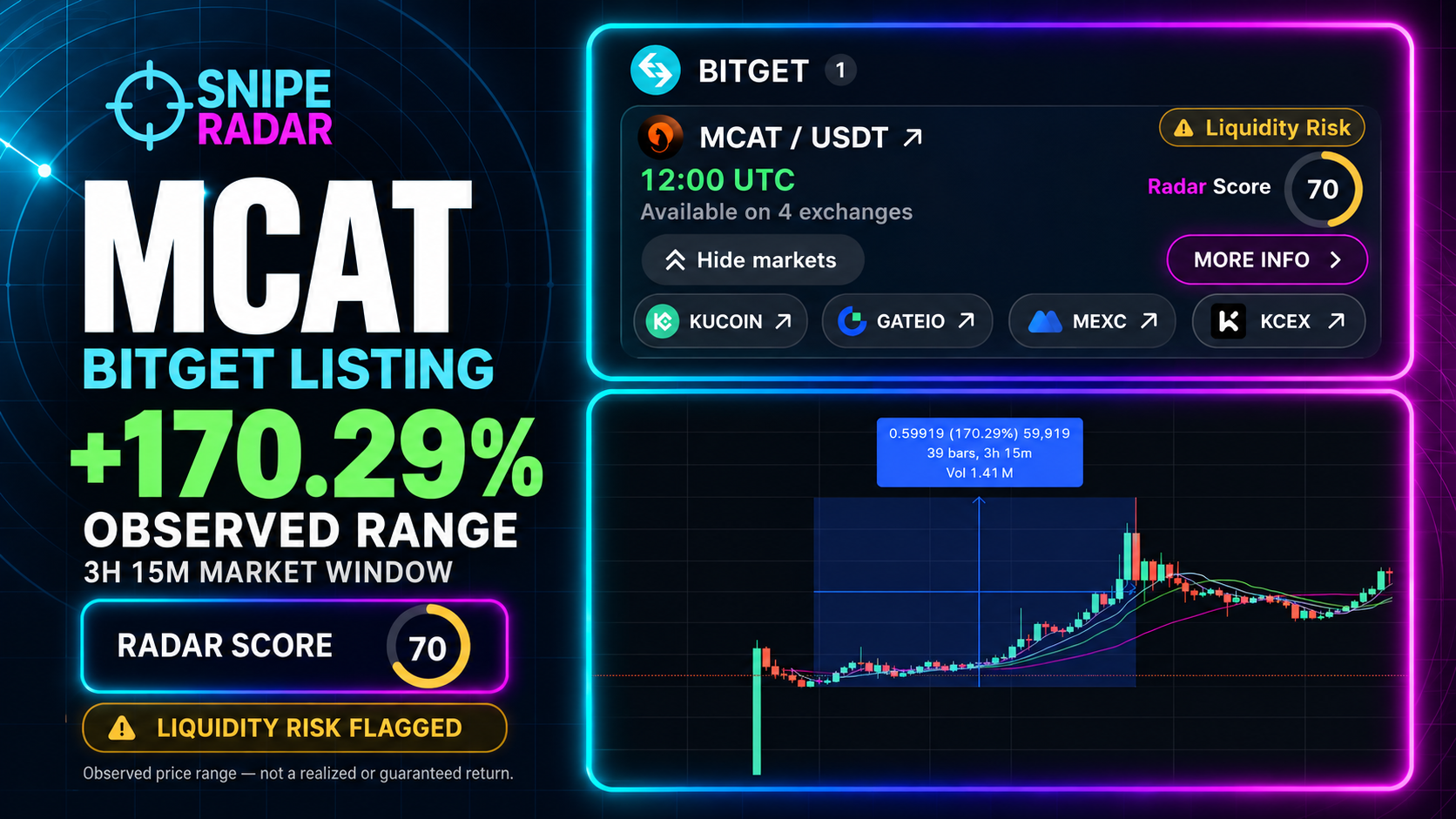
MCAT combined a Radar Score of 70 with a Liquidity Risk warning—and still produced a sharp upward price move. The supplied chart measures a 170.29% observed range over 3 hours and 15 minutes. It is a useful case study in how a listing can offer short-term upside potential while liquidity remains a separate concern.
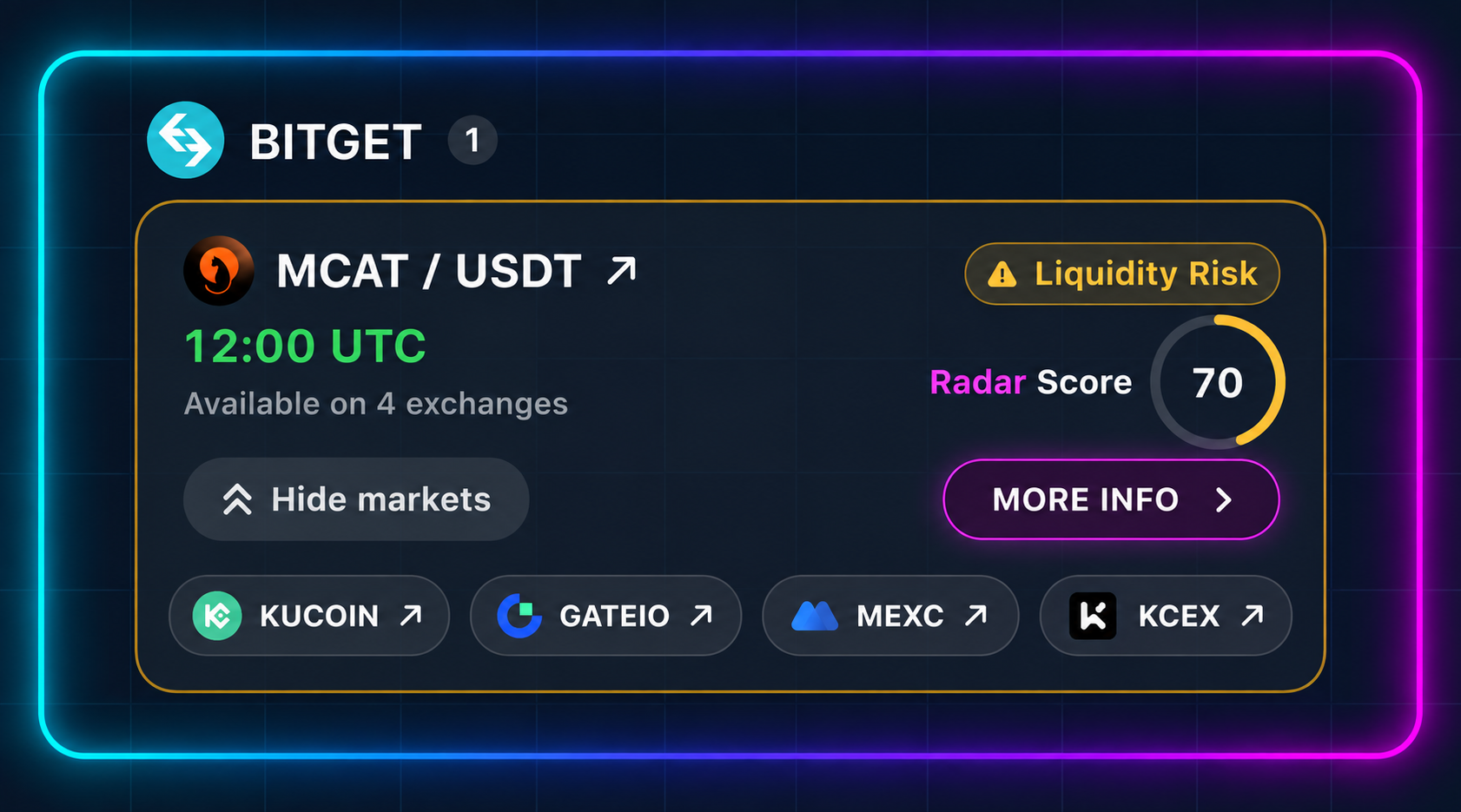
SnipeRadar's supplied Bitget card shows MCAT/USDT scheduled for 12:00 UTC, with four additional exchange markets displayed underneath. Bitget's official listing announcement confirms that spot trading was scheduled to open on September 10, 2026, at 12:00 UTC.
What is MarsCat?
On its official website, MarsCat presents itself as a privacy-first social platform built to operate on peer-to-peer networks. Its stated focus is direct communication, user-controlled identity and decentralized access to services.
The project describes identities based on keys generated locally on a user's device, rather than phone-number or email registration. It says communications use end-to-end encryption by default. Its client combines P2P messaging, a built-in wallet and access to network applications through a Substation Hub. These are the project's published descriptions, not an independent security assessment by SnipeRadar.
MarsCat also positions its network as an application platform. Its developer page describes SDK and API interfaces for wallet access, local signing, messaging and Substation integration, alongside tools for decentralized application delivery and payments.
The Bitget listing introduction adds an AI-focused description: assistants, agents, Web3 wallet connectivity, social communication and on-chain services, with RelayX Protocol and CAT Cloud named as infrastructure initiatives. Together, the published materials position MarsCat around privacy, communication, Web3 applications and AI. They do not establish adoption levels or justify a particular token price.
Five exchange markets visible in SnipeRadar
The supplied SnipeRadar card identifies five exchanges in total: the main Bitget market and four additional markets listed in the expanded view:
- Bitget — the MCAT/USDT market featured in the card.
- KuCoin.
- Gate.io — displayed as GATEIO.
- MEXC.
- KCEX.
“Available on 4 exchanges” refers here to the four additional markets under the Bitget card. This count describes the supplied SnipeRadar view; it is not a claim that only five exchanges worldwide offered MCAT, or that every market opened at the same time.
Radar Score 70 and Liquidity Risk can coexist
The card shows a Radar Score of 70, alongside a Liquidity Risk warning. The score provides listing context; it is not a 70% probability of profit. The warning highlights possible liquidity deterioration or insufficient depth to execute an intended trade.
Despite that warning, MCAT displayed short-term upside potential in the selected chart window. There is no contradiction: prices can rise quickly in a market where liquidity is fragile. A strong candle does not prove that a large order can be filled near its displayed price, or that liquidity will still be available when a holder wants to sell.
A 170.29% observed range in 3 hours and 15 minutes
The supplied chart's measurement tool displays a price difference of 0.59919, a relative move of 170.29%, and a duration of 39 bars / 3h 15m. That duration corresponds to five-minute bars. The selected measurement starts after the first tall opening candle and ends around the later upward spike.
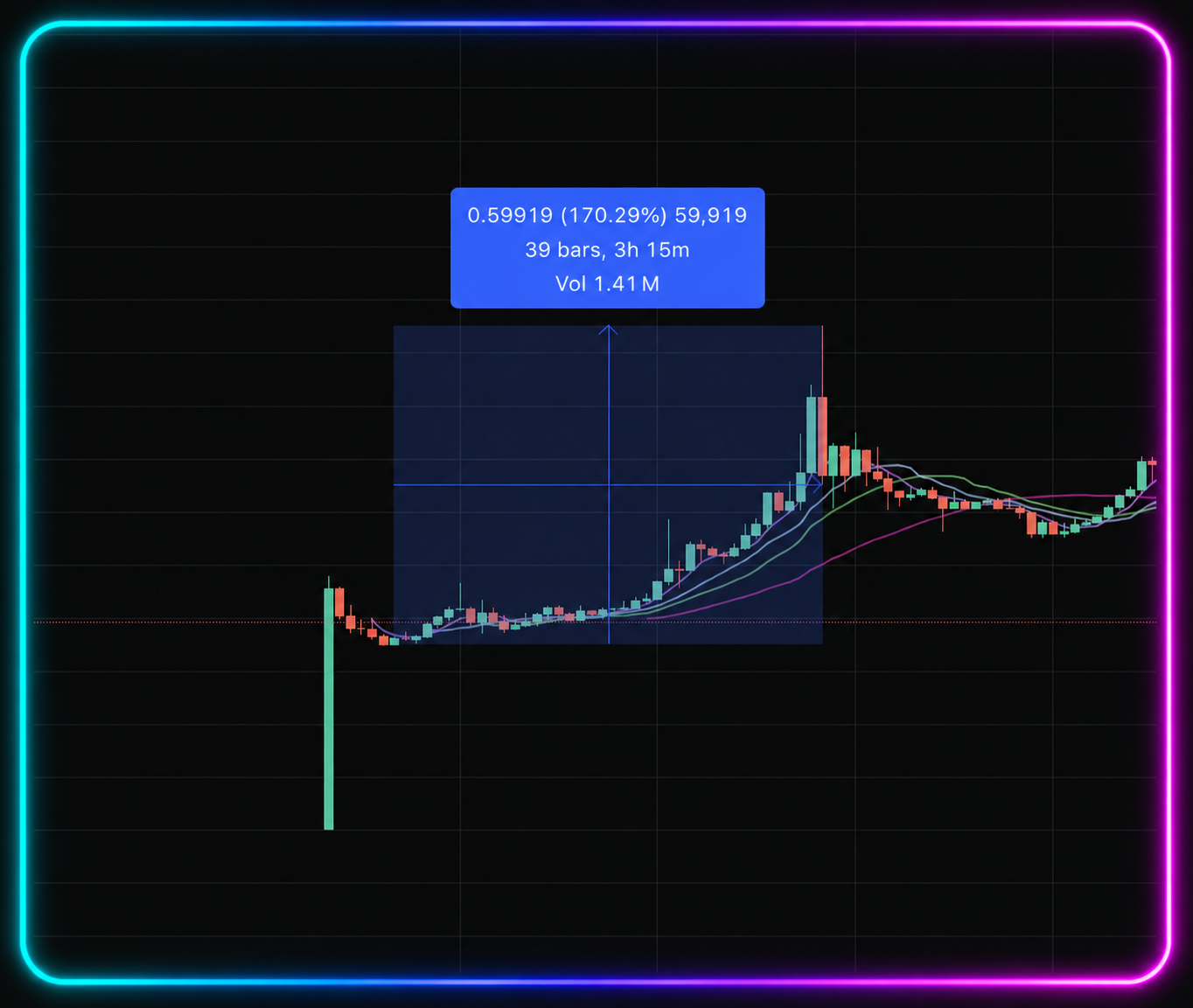
The move shows historical potential, not a documented trader return. Capturing any portion would depend on entry and exit timing, order-book depth, order size, fees and slippage. The supplied materials do not establish an alert-to-trade result, so the full range should not be presented as profit earned after a SnipeRadar notification.
What the MCAT case shows
MCAT illustrates why listing context and liquidity need to be read together. Radar Score 70 highlighted the event, five exchange markets provided broader context, and the subsequent selected price range showed a substantial move in a short window. Liquidity Risk remained relevant throughout that analysis: short-term upside does not remove execution risk.
Explore listing schedules, Radar Score and exchange context with SnipeRadar on the App Store or Google Play.